

Before I ever got into the van life side of things, I was a travelling sales rep, and I reckon I’ve slept in more motel rooms than I’ve had hot dinners. Most of them had a mattress you could’ve used as a trampoline and pillows like bags of sand, and I can tell you the stock mattress and bedding in most vans isn’t much better. Those years taught me one thing the hard way: it doesn’t matter how good your day was, if you don’t sleep well, the whole trip falls apart by lunchtime the next day.
If you’ve ever woken up in the van with a crook neck, a fitted sheet that’s slid halfway off the mattress and a chill you can’t shake, you already know exactly what I’m talking about. The bed is the heart of the whole setup, but caravan bedding is usually the last thing people sort out. It’s fair enough, there’s always something more urgent to fix. But a good night’s sleep is the cheapest comfort upgrade you’ll ever do in a van, and it doesn’t take much to get right.
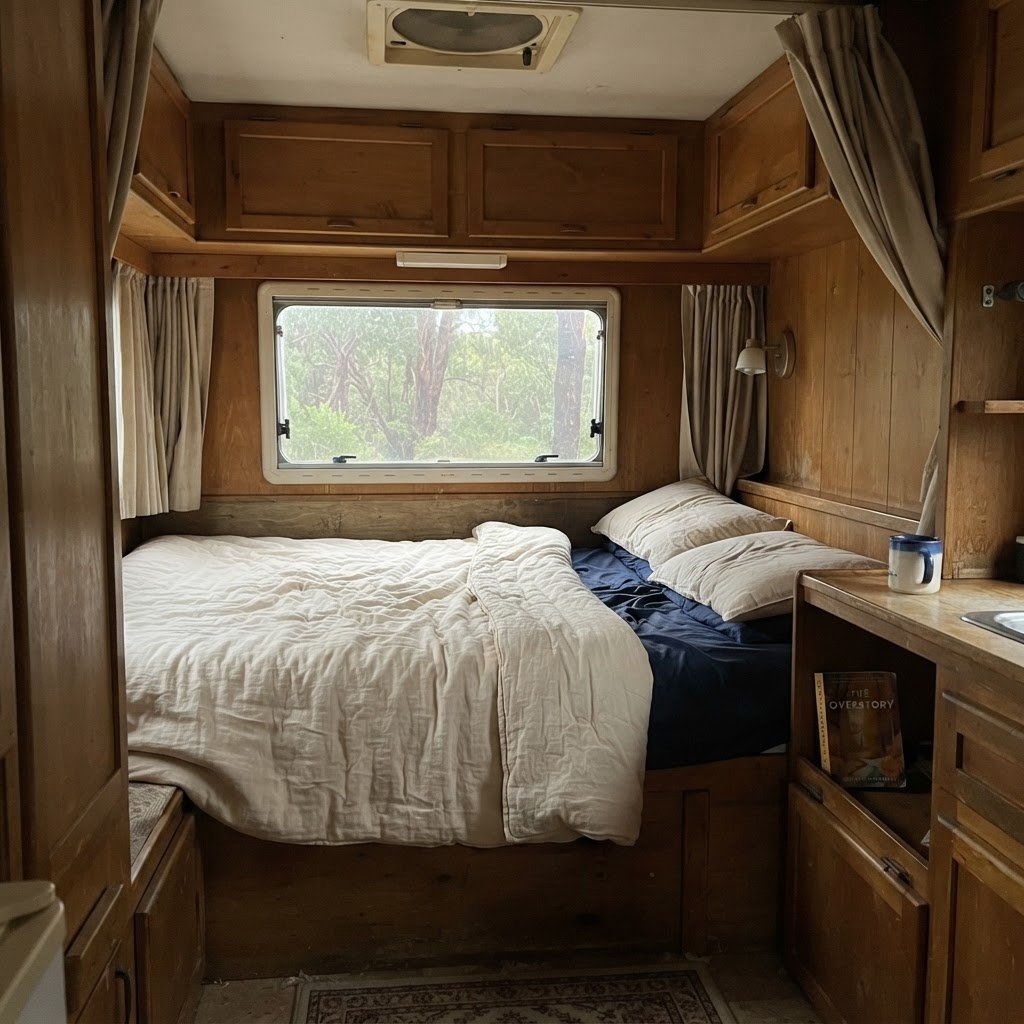
Your Caravan Mattress Is Not a Normal Bed, and That’s the Whole Problem
The first thing that trips people up is size. Caravan and camper mattresses are cut to fit the shell, so you end up with odd widths, corners knocked off at an angle, and beds a few centimetres shorter than anything you’ll find in a bedding shop. The mattress that came with the van is usually thin foam too, closer to a big gym mat than a real bed.
So before you buy anything, grab a tape measure and write down the length, the width at the head, the width at the foot, and the depth. Measure the deepest point of the mattress as well, because that’s what decides whether a fitted sheet will stay on. I’ve seen plenty of people order a beautiful queen set online, only to find the sheets won’t fit the cut-down mattress and the doona hangs over the doorway. Measure first, buy second, that one habit saves more headaches than any product will.
If the base mattress is tired but the size and shape are fine, a decent topper is the fix. Memory foam or a latex blend, five to eight centimetres thick, adds the comfort the thin foam can’t give you, and it’s a fraction of the cost of a whole new mattress.
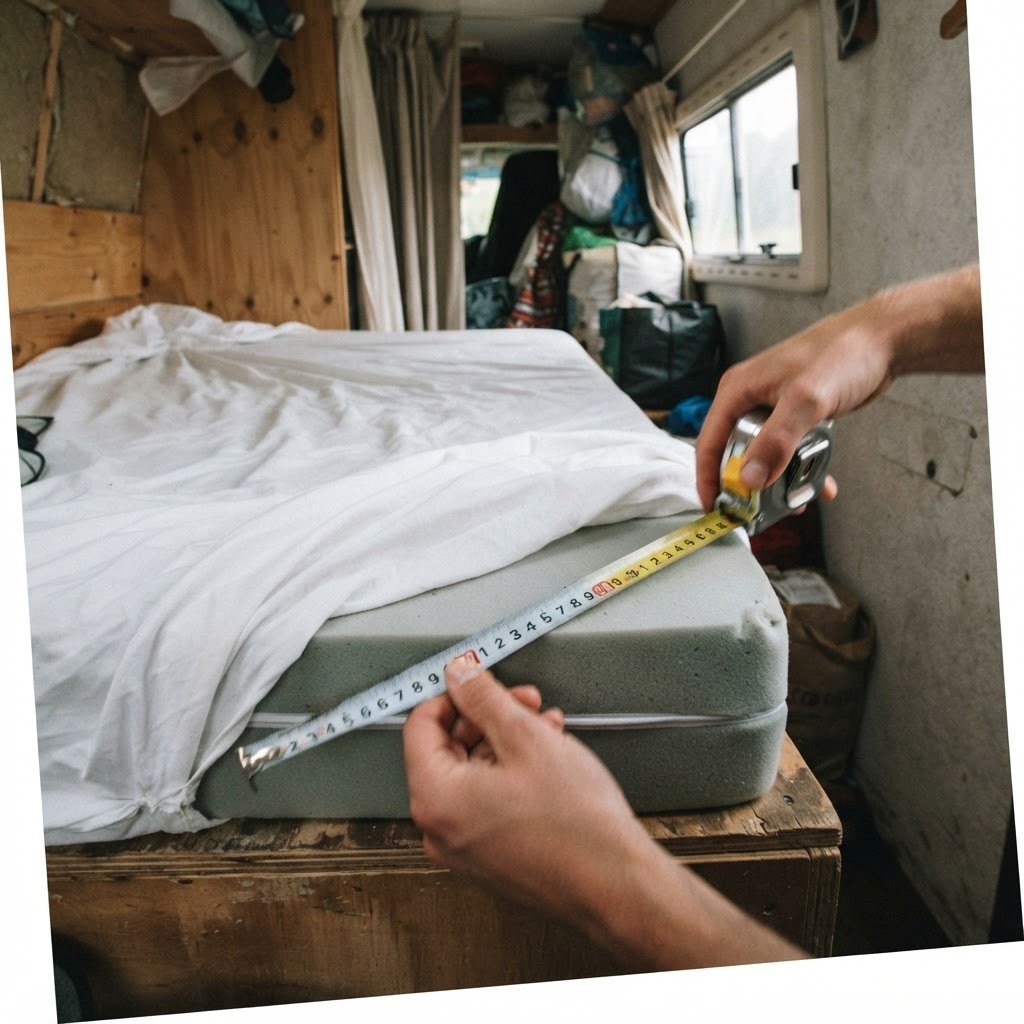
Caravan Bedding That Actually Stays Put
Standard fitted sheets are cut for standard home mattresses, so on a thin caravan bed you’ve got excess fabric everywhere and nothing pulling tight. The corners let go the first time you roll over, and by morning you’re sleeping on bare foam. Deep pocket fitted sheets, the ones with elastic running all the way around the edge rather than just stitched corners, hold a van mattress far better. If your mattress is an odd shape, it’s worth getting sheets made to measure, plenty of Aussie bedding places do it for not much more than the shelf price.
Material matters more in a van than at home. Brushed cotton or flannelette in winter, because the van gets colder than a house and cold sheets make for a rough first hour of sleep. Lightweight cotton in summer, because a van holds heat like a car. And keep it to one spare set, washed and stored in a vacuum bag under the bed. A full linen cupboard’s worth of bedding is just storage you don’t have.
Pillows, and Why Your Neck Will Thank You
Here’s where those motel years come in handy. A bad pillow doesn’t just wreck the night, it wrecks the next day too, and when your next day is six hours of driving on corrugated roads with your head checking every pothole, a crook neck is the last thing you need. Sleep pillows are personal, some people like them high, some like them flat, so I won’t tell you which to buy for the bed.
The travel neck pillow, though, earns its keep twice. On the long driving days between free camps, it supports your neck in the seat instead of letting your head nod around for hours. And if the bed pillow situation isn’t sorted yet, a decent memory foam neck pillow is a good backup for sleeping too, it holds your head at a consistent angle even when you’re wedged in a corner of the bed. A good one packs down small as well, so it’s not hogging your storage when it’s not in use.
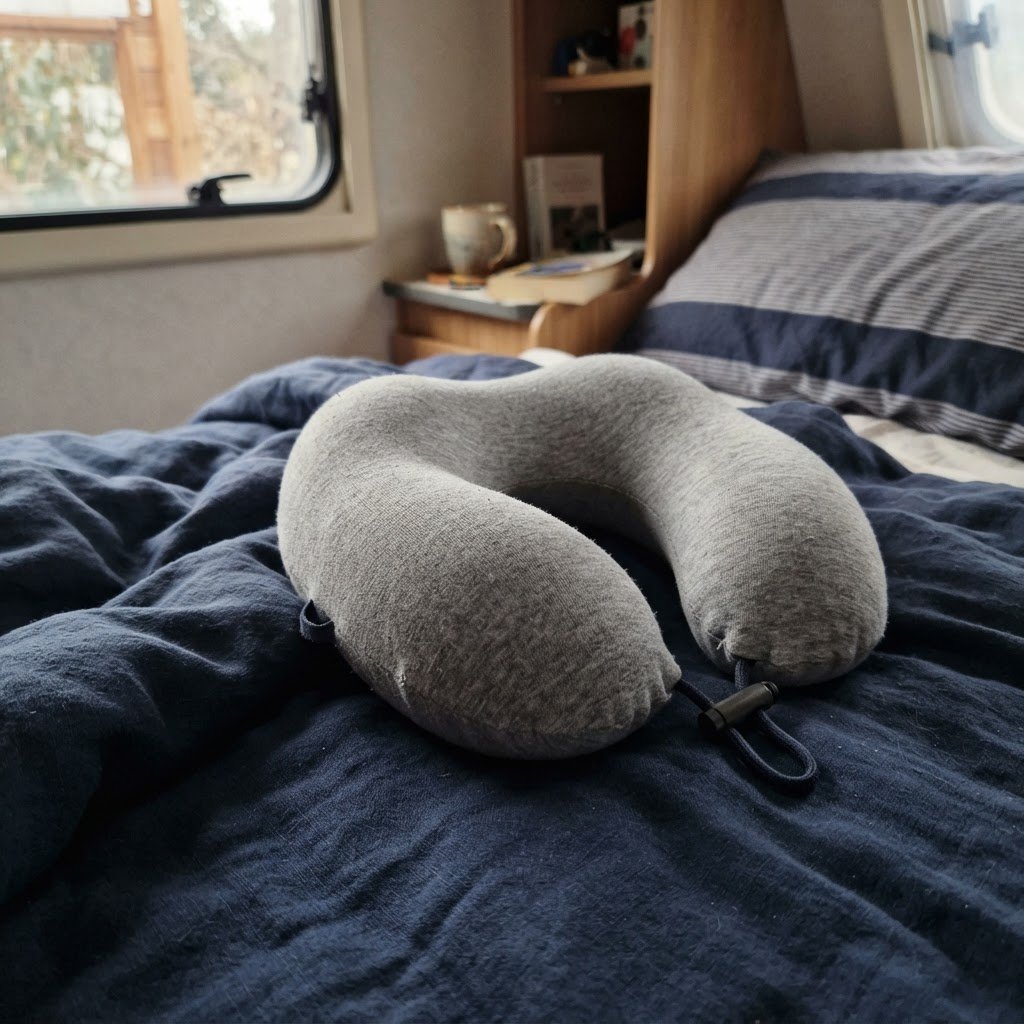
Sleeping Warm Without Cooking Yourself
Van beds and temperature go hand in hand. In winter the problem is cold air dropping onto the bed from the window above it, and in summer it’s the whole van holding the day’s heat. The fix is layering, not a thicker doona. A wool or decent synthetic doona plus a light blanket you can throw on or off beats one heavy doona every time.
If cold nights are your main issue, window insulation covers are the quiet hero here, they cut the cold radiating off the glass and stop a lot of the condensation that makes bedding feel damp by morning. On hot nights, airflow does the work, and we’ve covered ways to get air moving through the van separately. Either way, air the bed out every morning before you close up, moisture from a night’s sleep has to go somewhere and you don’t want it sitting in your quilt.
Quick Habits That Help Too
- Air the bed for ten minutes every morning before making it, unmade sounds lazy but it’s the single best thing for keeping bedding fresh and dry.
- Flip or rotate the mattress once a month, thin foam breaks down fast in the same spots.
- Keep a small lint roller in the van, dog hair and red dust get into everything and a fresh bed feels completely different.
- Make the bed properly, corners tucked, before a big driving day, loose bedding shifts around more than you’d think on corrugated roads.
- Wash the sheets on the same schedule you would at home, it’s easy to let it slide on the road and it’s the difference between a restful night and a scratchy one.
That’s about it, just remember the bed is doing more work in a van than it ever did at home. It’s your sleep, your lounge and sometimes your reading chair, so a measured mattress, sheets that stay put and a pillow that treats your neck properly are worth a Saturday of sorting. Sort the bed and everything else about the trip gets easier.
If cold nights are what’s keeping you up, the window insulation covers we use in winter are covered properly in our guide to condensation and mould, worth a read alongside this one.