
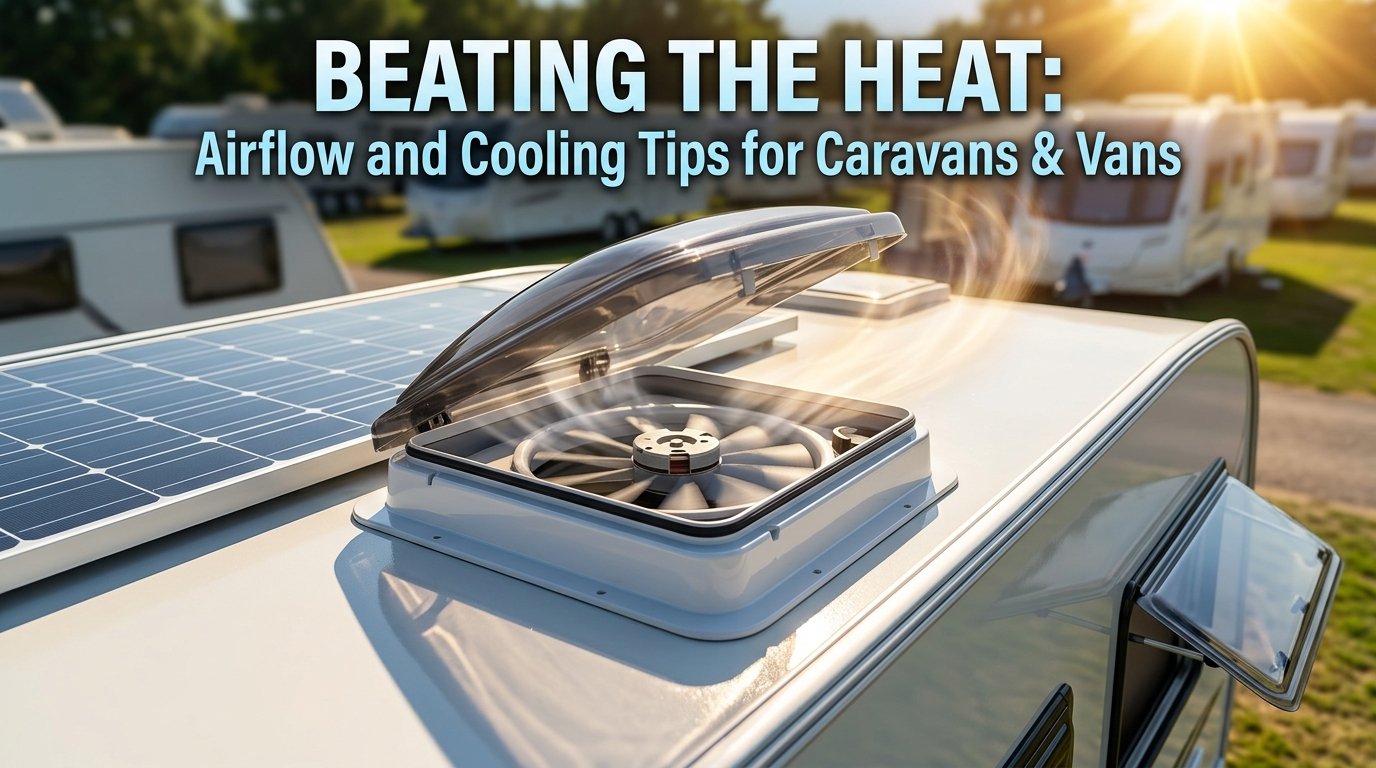

There’s a particular kind of heat that only happens inside a caravan or van that’s been sitting in the Australian sun for a few hours, the kind where the door handle is almost too hot to touch and the inside feels more like an oven than a bedroom. If you’ve ever lain awake at 1am with every window open and still felt like you weren’t getting anywhere, you’ve met this problem already.
The good news is you don’t need a roaring air conditioner running all night to fix it. A few changes to how air moves through your space, and the right gear to help it along, make a bigger difference than most people expect.
Why Vans and Caravans Heat Up So Fast
Caravans and vans are basically small metal boxes, and metal boxes in direct sun behave a lot like a greenhouse. Sunlight passes through the windows, turns into heat once it hits your interior surfaces, and then struggles to get back out again. Because the space is small and enclosed, that heat has nowhere to go and builds up fast, especially through the middle of the day.
By the time evening rolls around, your walls, benchtops and mattress have all been quietly storing heat for hours, and it takes a lot longer to shift than most people plan for. This is why opening just one window rarely helps much. Air needs somewhere to go in and somewhere different to go out. A proper cross-breeze, using a window on one side and a roof vent or window on the other, does far more to actually move hot air out than any single opening ever will.
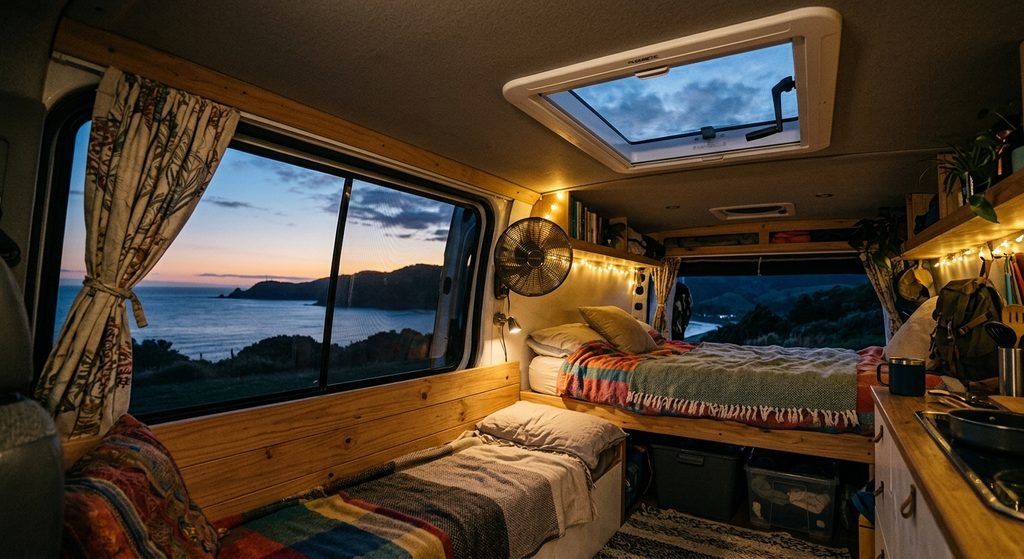
Airflow and Cooling Tips for Caravans: The Best Fan Setup for Summer Nights
Once the air is moving through the space, the next problem is that it’s not moving fast enough, especially once the wind drops off overnight, which it often does. This is where a decent fan earns its keep. Rather than trying to cool the whole van down, the goal is to get cool air across your skin, which can go a long way to making a hot night bearable.
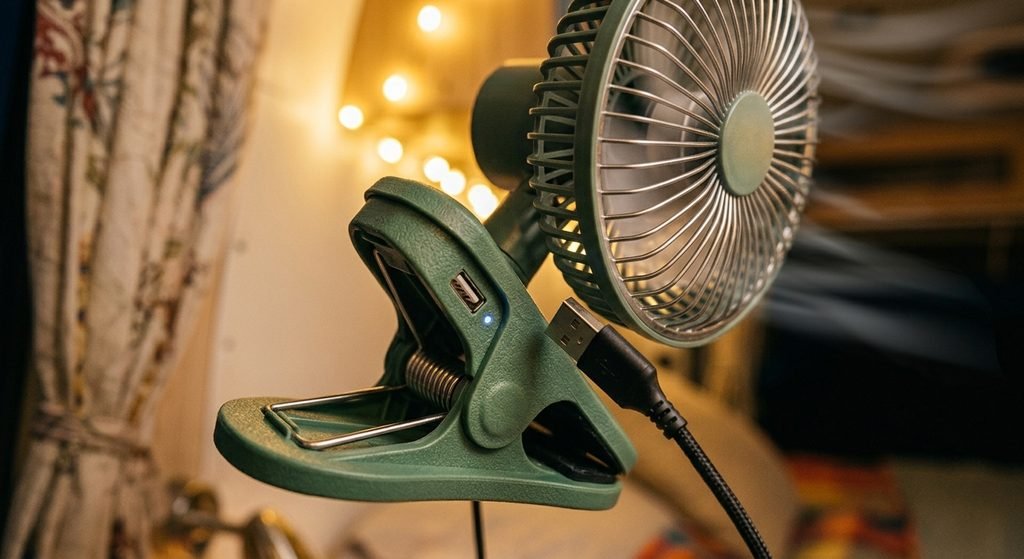
A USB rechargeable camp fan is the easiest way to sort this out. It doesn’t need to be wired into your 12V system, it runs quietly enough not to disturb a light sleeper and because it’s rechargeable, you’re not leaving something drawing off your house battery all night the way a hardwired fan can. Clip it near the bed, point it toward the airflow coming through your cross-breeze setup, and it does most of the heavy lifting for a comfortable night’s sleep.
Roof Vents: Letting Airflow In Without Letting Rain In
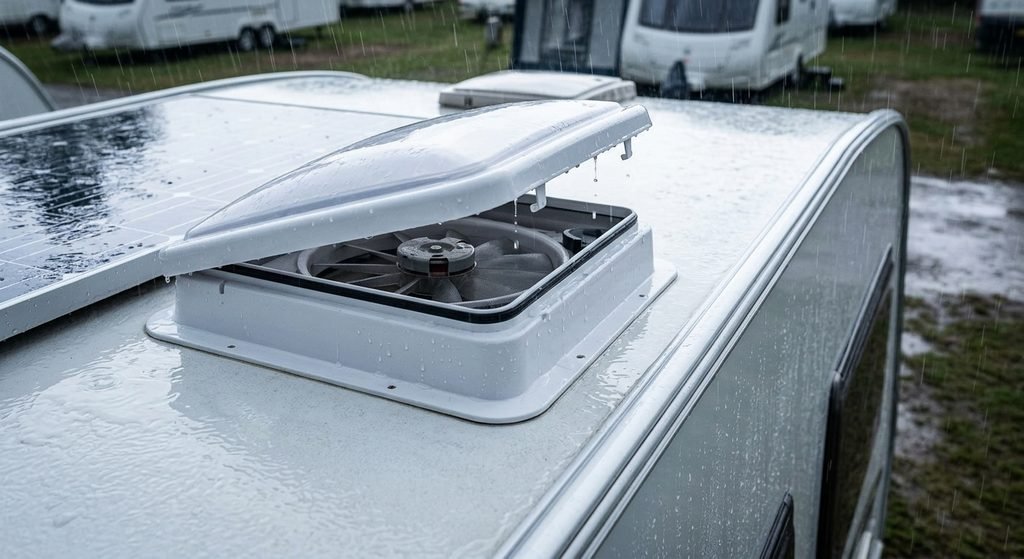
One thing that trips a lot of van lifers and grey nomads up is roof vents specifically. They’re one of the best ways to let hot air escape upward. Heat rises, so a roof vent is doing you a favour a side window can’t, but leave one open in a surprise shower and you’ll know about it fast. A few habits help here without needing to close the vent completely.
Many roof vents can be left cracked open slightly rather than fully open, which still allows some airflow while reducing how much rain gets in during light showers. Checking the forecast before you settle in for the night is worth the ten seconds it takes, and if rain looks likely, it’s usually safer to rely on cross-ventilation through windows, which you can control more precisely, and close in seconds, rather than leaving a roof vent open and hoping. Parking with your roof vent facing away from the prevailing wind direction also cuts down how much rain gets funnelled straight in when a vent is open.
If keeping roof vents open through unpredictable weather is a recurring headache for your setup, it’s worth knowing this is a genuine gap in the market, a dedicated rain-safe vent cover is something we’re actively looking into adding to the range, so watch this space.
Quick Habits That Help Too
- Park in shade where you can, and use an annexe, awning or reflective sunshade over windows during the hottest part of the day, and remember heat-related illness can sneak up fast on really extreme days.
- Cook outside or with the door open whenever possible, a stovetop or kettle running inside a closed-up van adds heat and humidity you’ll be dealing with for hours afterward.
- Open everything up early morning and again in the evening when outside air is cooler, rather than waiting until the middle of the night when you’re already overheated.
- Pair your fan with a damp cloth around your neck or a spray bottle of water on really brutal nights, evaporative cooling adds a surprising amount of relief on top of moving air.
The Bottom Line
Beating Australian summer heat inside a van or caravan isn’t about fighting it with brute force, it’s about getting air moving through the space properly, having a reliable fan for the nights the wind doesn’t cooperate, and being smart about when roof vents are worth the risk. Good airflow also helps keep condensation and mould at bay once the weather cools again. Sort your airflow, and the worst of the heat stops being something you have to survive and starts being something you barely notice.