
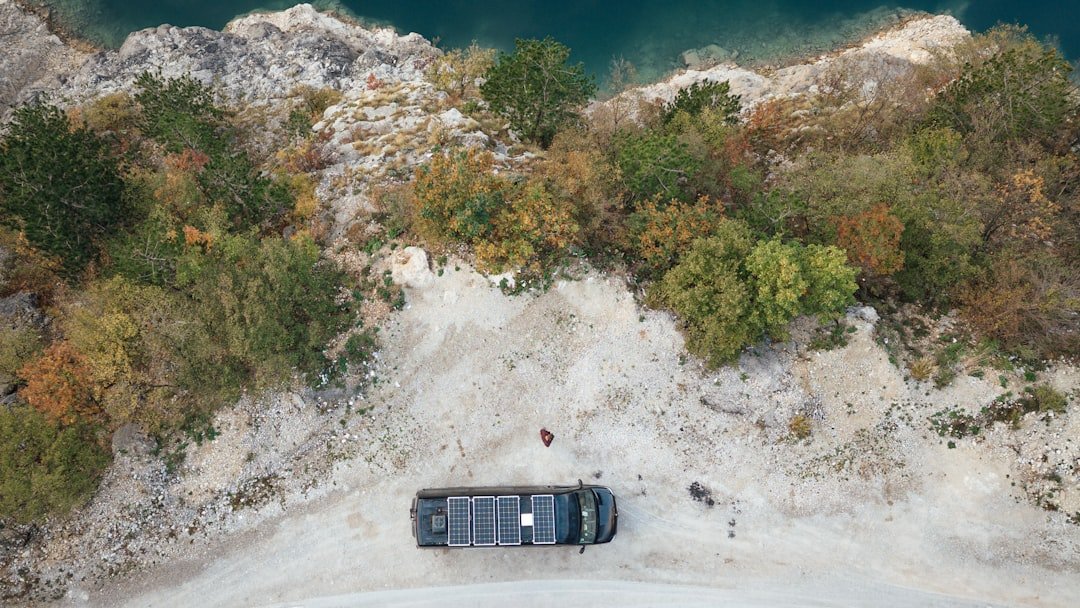

Power is one of those subjects that can make your first caravan or van setup feel far more complicated than it needs to be. You start out wondering how to keep the fridge running and charge your phone, and before long you are reading about amp-hours, watts, inverters, DC-DC chargers and solar regulators.
The good news is that you don’t need to become an electrician to understand the basics. Once you know where the power comes from, where it is stored and what is using it, a 12V system starts to make a lot more sense.
The Simple Version: How a Caravan 12V System Works
At its simplest, think of your setup as three parts: you collect power, store power and use power.
Your solar panels and vehicle charging system put energy back in. Your battery stores that energy. Your fridge, lights, water pump, fans, USB chargers and other appliances take energy out.
Most setups also have equipment sitting between those parts to manage the flow safely. A solar regulator controls power coming from the solar panels, while a DC-DC charger manages charging from the tow vehicle. If you want to run normal 240V appliances away from mains power, an inverter converts battery power into 240V AC.
Start With What You Actually Want to Run
Before choosing batteries or covering the roof in solar panels, work backwards from your camping style.
Someone staying mostly in powered caravan parks has very different needs from someone hoping to spend several days beside a remote beach without plugging into anything.
Make a simple list of the things you expect to use each day. Your fridge is usually running around the clock. Lights may only be on for a few hours. Phones and tablets need charging. A water pump runs intermittently. Fans, Starlink, laptops, coffee machines, induction cooktops and hair dryers can change the equation considerably.
This is where many first setups go wrong. It is easy to buy a battery because somebody online says a particular size is enough, without considering that their camping habits may be completely different from yours.
Understanding Amp-Hours Without the Headache
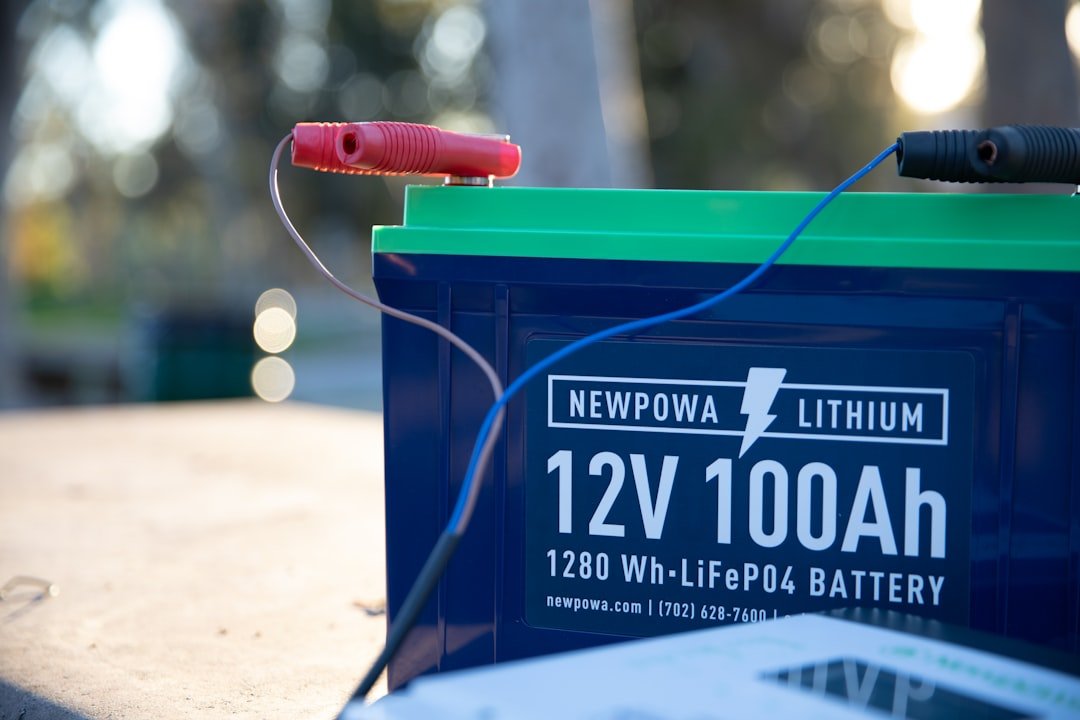
Battery capacity in caravan and van systems is commonly described in amp-hours, usually written as Ah.
A 100Ah battery does not simply mean you can run a 10-amp appliance for exactly ten hours in every situation. Battery chemistry, temperature, discharge rate, inverter losses and other factors affect real-world performance. But amp-hours are still a useful way to compare battery capacity and estimate your daily needs.
The important number is not just how big your battery is. It is how much power you use between opportunities to recharge it.
AGM vs Lithium Batteries
For many travellers today, the battery decision comes down to AGM lead-acid or lithium, usually LiFePO4.
AGM batteries
AGM batteries have been used in caravans for years. They are generally cheaper to buy initially and can work perfectly well in a modest setup. The trade-off is weight and a lower practical usable capacity if you want to preserve battery life.
Lithium batteries
Lithium batteries generally cost more upfront but are lighter, can provide substantially more usable capacity for their rated size and usually accept charge more efficiently. They have become particularly attractive for travellers who spend a lot of time off-grid.
However, upgrading from AGM to lithium is not always as simple as swapping one battery for another. Your charger, solar regulator, DC-DC charger and other parts of the system need to be suitable for the battery chemistry.
How Much Solar Do You Need?
Solar is brilliant when conditions cooperate, but the number printed on the panel is not what you should expect to receive all day.
Shade, cloud, panel temperature, the angle of the sun, time of year, dirt and where you are travelling all affect solar production.
Rather than asking, “How many watts of solar should I have?”, a better question is, “How much energy do I normally use each day, and how reliably can I replace it?”
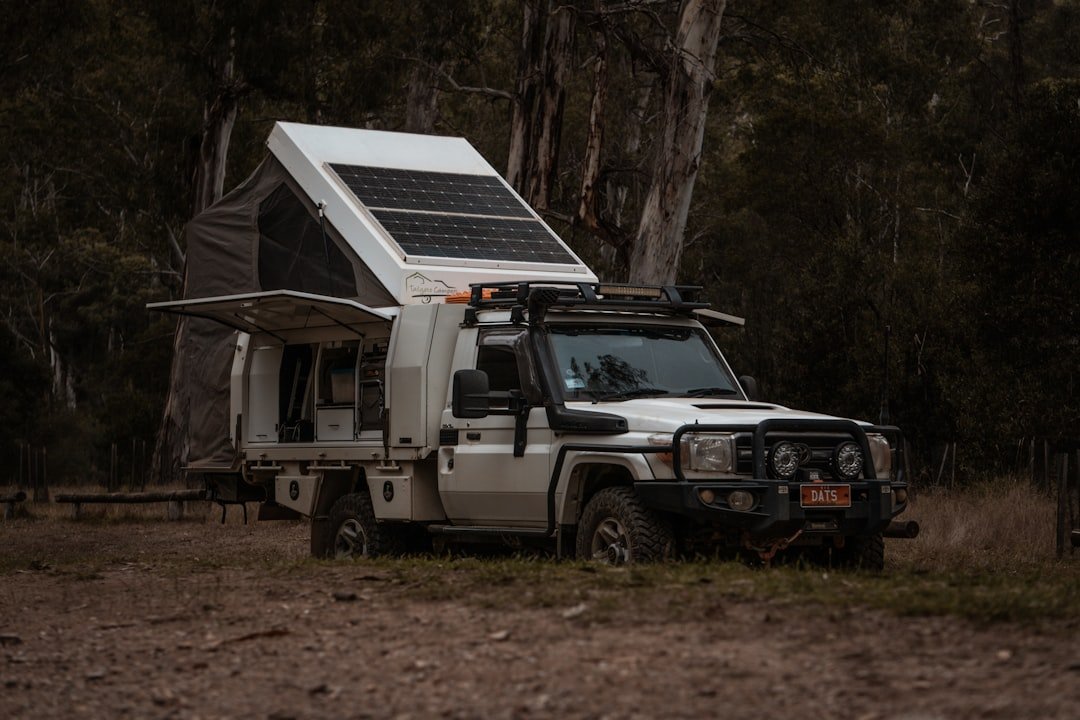
Roof-mounted solar is convenient because it can be collecting power whenever the van is in the sun. Portable panels can be useful because you can park the van in the shade and move the panel into sunlight. Plenty of travellers use a combination of both.
What Does a Solar Regulator Do?
A solar regulator, or solar charge controller, sits between your solar panels and battery. Its job is to take the power produced by the panels and charge the battery appropriately.
You will commonly see PWM and MPPT regulators. MPPT controllers are generally the more capable option and are widely used in modern touring setups, particularly where getting the most from available solar matters.
Charging While You Drive: DC-DC Chargers
Solar is only one way to replenish your batteries. A DC-DC charger allows the vehicle’s electrical system to charge the auxiliary or caravan battery while you drive.
For a Big Lap, this can be particularly useful. If you are moving regularly, travel days become another opportunity to put energy back into the battery instead of relying entirely on sunshine.
The charging system needs to be correctly designed for the vehicle, battery and cable run, so this is an area where professional installation can be worthwhile.
What Is an Inverter — and Do You Need One?
Your battery system is generally 12V DC. Many household appliances are designed for 240V AC. An inverter converts the battery’s DC power into AC power so compatible 240V appliances can be used when you are not connected to mains electricity.
The catch is that high-powered 240V appliances can pull a surprising amount of energy from a 12V battery.
A small inverter for charging a laptop is one thing. Running a coffee machine, microwave, induction cooktop, toaster, air conditioner or hair dryer is another.
This does not mean you cannot run those appliances. It means the battery bank, inverter, cabling, charging capacity and protection all need to be designed with those loads in mind.
The Appliances That Catch New Travellers Out
Heating and cooling things generally takes a lot of energy. That is why appliances such as kettles, toasters, induction cooktops, hair dryers and air conditioners deserve extra attention when planning an off-grid system.
A useful rule is to separate the things you need from the things that are simply nice to have. Keeping food cold, running lights, operating the water pump and charging phones is a very different electrical challenge from recreating your entire kitchen at home.
There is nothing wrong with wanting the comforts. You just need to build the power system accordingly — and budget for it.
A Simple Beginner Setup
There is no universal system that suits every traveller, but a basic touring setup might include a suitable auxiliary battery, roof or portable solar, a compatible solar regulator, DC-DC charging from the vehicle, fused 12V distribution and USB charging.
From there, the system can become larger depending on how long you want to camp off-grid and whether you want to run significant 240V loads.
The key is not to buy the biggest system you can afford. It is to build a system that matches the way you intend to travel.
Plan for Bad Solar Days
One of the easiest mistakes to make is designing a system around a perfect sunny day.
Australia gives us plenty of sunshine, but it also gives us cloudy weeks, shady campsites, winter sun angles and days when the solar panels simply cannot keep up.
A sensible setup gives you some breathing room. That might mean additional battery capacity, charging from the vehicle, occasional access to mains power or simply knowing which non-essential appliances to switch off when energy is limited.
Safety Matters With 12V Systems Too
It is tempting to think of 12V as harmless because the voltage is low. But batteries can supply extremely high current, and poorly sized cables, inadequate fusing or bad connections can create serious heat and fire risks.
High-current battery and inverter installations need correctly sized cabling, appropriate fuses or circuit protection and secure connections. Any 240V electrical work in a caravan or recreational vehicle should be handled in accordance with Australian requirements by an appropriately licensed electrical worker.
Don’t Design Your First System Around Someone Else’s Van
Online touring groups are fantastic for ideas, but electrical setups are particularly easy to compare without enough context.
The traveller with a huge lithium bank and enough solar to run an induction kitchen may genuinely need it. The couple beside them with one modest battery may also have exactly the right system.
Your ideal setup depends on how you travel, how often you move, whether you use powered sites, what appliances matter to you and how long you want to stay off-grid.
Power Is Just Another Part of Planning Your Big Lap
If you are preparing for your first lap of Australia, it helps to think about power alongside the rest of your trip rather than treating it as a completely separate project.
Your electrical setup affects what you pack, how much weight you carry, where you can camp and how much money you need to put aside before leaving.
If you are still working through those decisions, have a look at our guides to what to pack for your first Big Lap and building a realistic Big Lap travel budget. Together, they will give you a much clearer picture of what you actually need before spending money on gear.
The Easy Wanderer Takeaway
You don’t need to understand every electrical formula before setting off around Australia. Start with your daily power needs, decide how long you want to operate without plugging in, and then make sure your battery and charging system can realistically support that.
Build for the way you travel, leave yourself some margin for cloudy days, and get qualified help where the installation requires it.
Once the basics click, 12V power stops looking like a mysterious collection of boxes and cables. It becomes what it should be: another tool that gives you a little more freedom to wander.
[…] A mounted phone running navigation all day chews battery, and a flat phone is no better than a phone on the floor. If you’re running more than one device — phone, tablet, the kids’ whatever — it’s worth getting your 12V charging sorted, we’ve covered the basics in our guide to 12V, solar and batteries. […]