
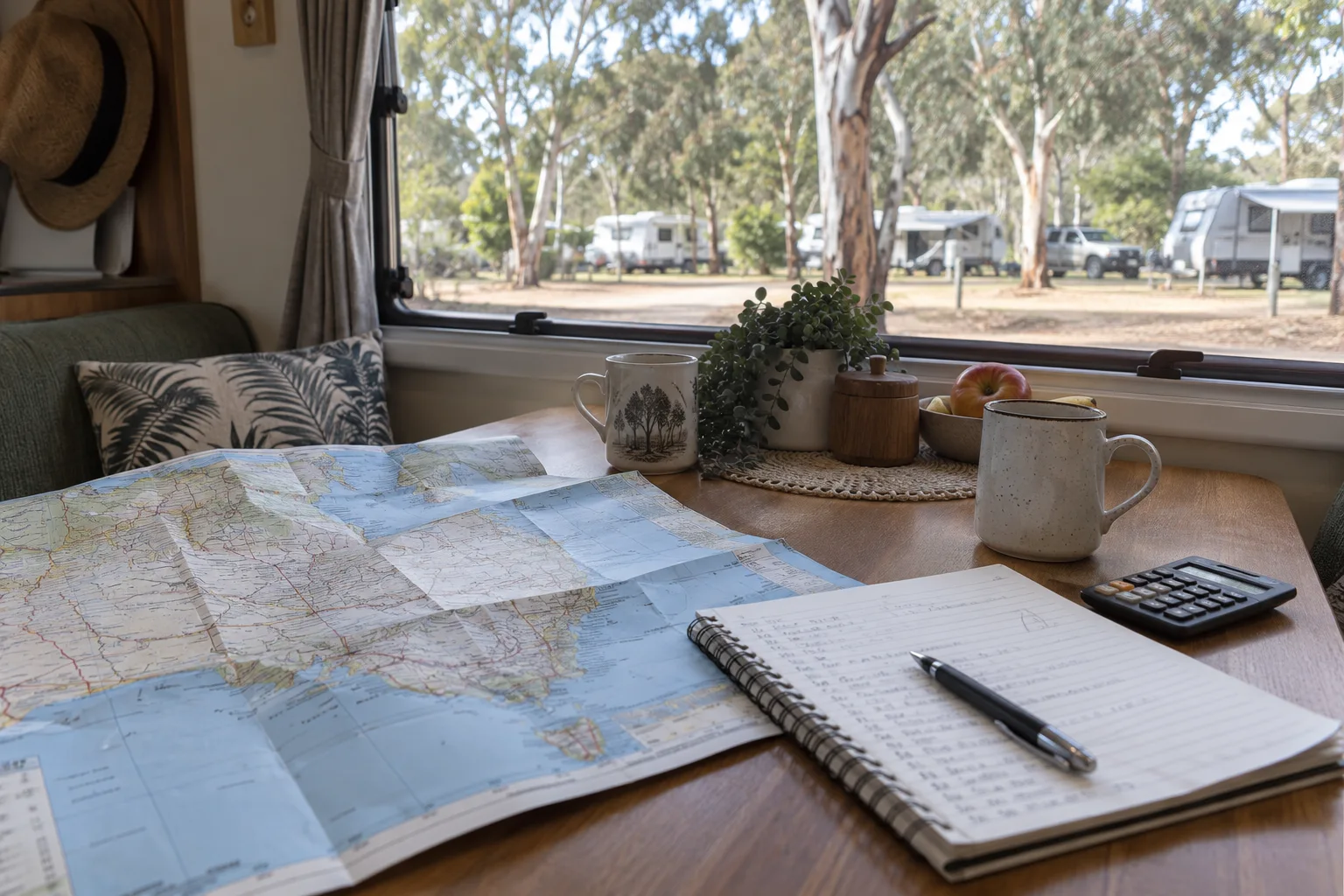

Before you start adding up fuel and caravan parks, have a think about the trip you actually want to take. Your Big Lap budget should start there.
Are you heading off for three months with a fair bit of driving each week? Taking a year and staying longer when you find somewhere you like? Or still working out how long you can afford to be away?
You’d probably budget a bit differently for each. Someone who moves every second day will have a different fuel bill from someone who spends a fortnight fishing in the same spot.
You don’t need to predict every coffee and bag of ice. But you do want a reasonable idea of what the trip will cost before you’re a long way from home wondering where the money went.
This guide helps you choose sensible figures for your Big Lap budget, from fuel and campsites to the bills that follow you from home. Have your route, recent grocery spending and a few campsite quotes handy as you work through it.
Start with the trip, then put numbers against it
Write down who’s travelling, roughly how long you’ll be away and the places you really want to visit. Add the kind of camping you expect to do and the activities you’d be disappointed to miss.
A powered site with a hot shower might be part of the plan most nights. You might prefer basic camps with the occasional caravan park stop to wash everything and recharge. Either way, budget for what you’ll actually enjoy doing.
If you’re travelling with someone, talk about this together. It’s better to find out now that one of you is picturing fishing and quiet camps while the other has a list of boat trips and restaurants.
Keep your money plan in three parts: getting ready, living on the road and covering the unexpected. Then add any bills that will keep arriving at home.
Work out what needs spending before you leave
The trip starts costing money before you pull out of the driveway.
Put together a separate list for vehicle and caravan preparation. That might include servicing, tyres, repairs, a loaded weight check and any equipment your planned route calls for. Get quotes for the bigger jobs instead of dropping a hopeful number into the budget.
Then look at what you already own. Test the fridge, lights, charging gear and cooking setup before deciding what needs replacing.
If you still need to buy the vehicle or caravan, keep that purchase and any repayments visible in the overall plan. The weekly example below assumes you already have your setup.
Our First Big Lap packing guide is a useful place to work through what earns a spot. You don’t need to buy something for every empty cupboard.
Calculate fuel from your own setup
For fuel, start with the kilometres you expect to cover and your actual fuel use when loaded or towing. Add day trips and supply runs, not just the line between overnight stops.
The calculation is:
Kilometres ÷ 100 × litres per 100 km × price per litre = fuel cost.
For example, suppose you travel 600 km in a week, use 16 litres per 100 km and allow $2.20 per litre:
600 ÷ 100 × 16 × $2.20 = $211.20.
Those are example inputs, not a current fuel quote or a prediction for your vehicle. Replace them with your own figures and check prices along your route. In Western Australia, FuelWatch provides local fuel-price information.
Run the calculation again for a longer driving week and a higher fuel price. You’ll get a better feel for how much room you need than you would from one tidy average.
Staying longer can reduce weekly fuel spending if you drive fewer kilometres. It won’t necessarily reduce the fuel required for the same total route, and extra days still need feeding and accommodating.
Budget for the campsites you’ll actually use
Have a look at real campsite prices for your route and travel dates. Check whether the price covers your whole group, whether power costs extra and whether access fees apply separately.
Don’t assume every national park uses the same pricing. Check the relevant park’s current fees and what they include. For Queensland stops, start with Queensland Parks’ camping fees and booking details.
Split your planned nights between caravan parks, paid basic camps and any permitted free stops you’ve actually identified. Make sure those nights add up to the full stay, then use the total nightly cost for everyone travelling. If a campsite charges per person, work out your group’s cost first.
A simple way to start is to price a sample week, then adjust for the places where you expect to stay longer.
Free camping can help the budget, but don’t build the whole trip around finding a suitable free spot every night. Check access, facilities, stay limits and whether your setup meets the campground’s requirements.
Leave enough flexibility to pay for a different option when plans change. After a wet stretch, somewhere to wash and dry everything might feel like money well spent.
Put food and ordinary life in the budget
Start with what you normally spend on groceries, then think about what will change on the road. Plan around fridge space, reliable shopping stops and meals you’ll actually cook.
If you like a pub meal, include it. If coffee out is part of your morning, include that too. A budget that depends on suddenly becoming a different person is going to need editing fairly quickly.
Keep groceries and eating out separate so you can see where the money goes. Add laundry, gas, phone and data, toiletries and the little supplies that need replacing.
A workable kitchen helps you use the food you buy. Our small caravan kitchen guide has ideas for keeping camp cooking manageable.
A worked Big Lap budget example for two
This is a worked example in Australian dollars, not a recommended spending target or an average cost of travelling Australia. It assumes two adults, an existing vehicle and caravan, mostly cooking at camp and 600 km of driving that week. Every allowance below needs checking against your own plans.
| Item | Example assumption | Weekly amount |
|---|---|---|
| Fuel | 600 km, 16 L/100 km, $2.20/L | $211.20 |
| Camping | Three nights at $50, four at $20; assumed total site prices for two | $230.00 |
| Groceries | Chosen allowance for two adults | $220.00 |
| Meals and coffees out | Chosen allowance | $60.00 |
| Activities | Chosen allowance | $60.00 |
| Laundry, gas and small supplies | Weekly allowance towards irregular purchases | $30.00 |
| Phone and data | Weekly share of assumed plans | $25.00 |
| Weekly travel spending | $836.20 | |
| Maintenance provision | Money set aside, not necessarily spent that week | $60.00 |
| Weekly amount to allow in this example | $896.20 |
This excludes setup purchases, registration, insurance, roadside assistance, bills at home, finance repayments and a separate emergency reserve. Add your own amounts for these before deciding whether the trip fits your available money.
Repeating this exact pattern for 12 weeks would mean 7,200 km of driving and $10,754.40, including the maintenance provision. That’s a calculation from this example, not a quote for a three-month trip. If you spread the same 7,200 km over a longer trip, keep that total distance unchanged and increase the costs that depend on time, such as food and camping.
A ferry crossing, an expensive tour or a long driving stretch can change a week considerably. Put known bigger costs against the weeks they’ll happen rather than hoping the average covers them.
Remember the bills back home
Leaving the house doesn’t automatically stop the bills.
List anything that continues: rent or mortgage repayments, rates, insurance, storage, subscriptions and whatever utilities you’re keeping connected. Include vehicle and caravan registration, insurance and roadside assistance somewhere in the overall plan, too.
To spread an annual bill across your weekly budget, divide it by 52. For monthly bills, multiply by 12 and divide by 52. Still note the actual due dates—you’ll need the money available when payment comes around.
Count each bill once. If your phone is already in the travel budget, don’t add the same plan again under home expenses.
Keep room for things going south
Routine servicing and an unexpected breakdown are different expenses. A weekly maintenance provision helps with planned upkeep, but it isn’t automatically enough for a major repair.
Keep a separate reserve for disruptions. Think about what a repair, extra accommodation or getting home unexpectedly could mean for your circumstances. There isn’t one amount that suits every vehicle and route.
Check what your insurance and roadside assistance actually cover, including your caravan and the places you intend to travel. Use those details when deciding what you need to allow yourself.
If the numbers are tight, look at the route, pace or length of the trip before cutting essential preparation or relying on nothing going wrong.
Bring your Big Lap budget together
Once you’ve worked through the figures, keep these amounts separate:
One-off setup costs: what you still need to spend before leaving.
Travel costs: fuel for the total route, camping, food and everyday spending for the time away.
Other commitments: bills at home, repayments and periodic costs you still need to cover.
Maintenance provision and emergency reserve: money available for upkeep and disruptions, including any portion you don’t end up spending.
Together, they give you an estimate of the money to allow for the trip. Your average weekly travel cost should describe life on the road; it shouldn’t quietly spread the purchase of a caravan or your entire emergency reserve into the same figure.
Enter costs for your whole travelling group. Two people sharing a site don’t necessarily pay twice the site price, and doubling every figure won’t give you a reliable family budget.
Try a few versions of the plan. What changes if you reduce the distance, spend fewer nights in caravan parks or allow more for the activities you really want to do? Change one thing at a time so you can see what’s making the difference.
Try the budget on a short trip
Pack up for a few nights close to home and record what you spend. Keep it simple: fuel, camping, food, extras and anything you hadn’t thought about.
You’ll get an early look at your loaded fuel use, how often you eat out and whether the camping arrangement suits you. A short local trip won’t capture every cost of remote travel, but it will give you better starting figures than guessing everything.
Once you’re away, have a quick look at planned spending versus actual spending each week. Adjust the coming weeks as you learn. One expensive week doesn’t tell you much on its own; a repeated gap deserves a closer look.
The aim is to give yourself enough room to enjoy the trip. If there’s an experience you’ve been looking forward to for years, put it in the plan. You don’t want to drive past it because you budgeted for everything except the reason you came.
If you’re still sorting your setup, work through what to pack for your First Big Lap—and what can stay home next.
What’s the expense you’re finding hardest to estimate for your trip?
[…] you spend up on extra gear, have a look at our guide to building a realistic Big Lap travel budget. Work out what you need before leaving, then leave room for fuel, campsites and enjoying the […]
[…] through those decisions, have a look at our guides to what to pack for your first Big Lap and building a realistic Big Lap travel budget. Together, they will give you a much clearer picture of what you actually need before spending […]