
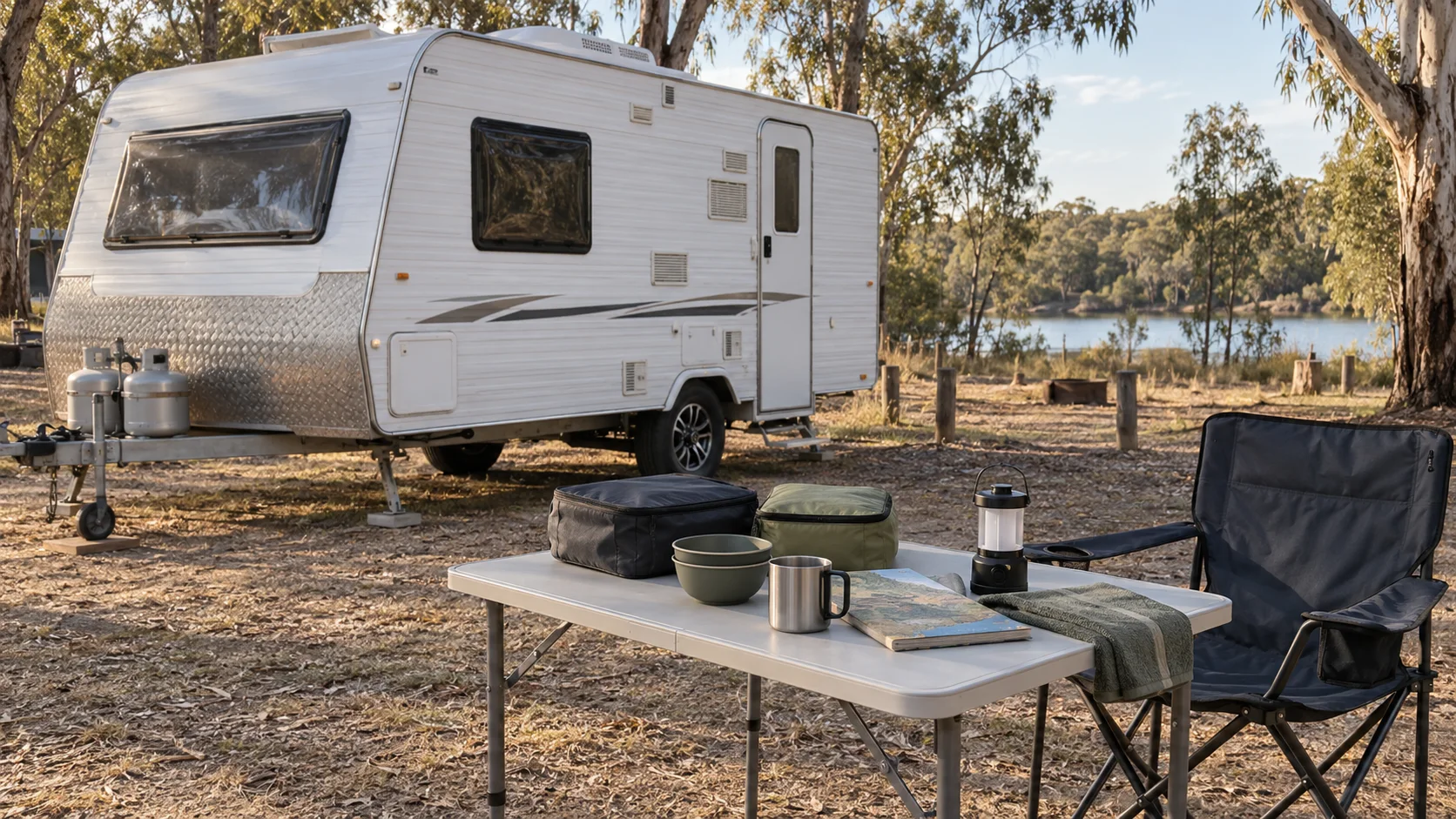

Before you start filling the caravan for your first trip around Australia, have a think about what you’re actually planning to do. Your Big Lap packing list should start there.
Are you going hiking? Taking the fishing rods? Or mostly sitting around camp, cooking a feed and having a drink? You’d probably pack a bit differently for each, so I reckon that’s where you start.
If you’re fishing, bring the rods. If you’re walking, bring decent boots, especially if it gets muddy. If dinner’s going to be steaks, you’ll need somewhere to keep them cold and something to cook them on. Someone will probably bring a salad as well. Leave them a bit of room in the Esky.
It sounds obvious, but it’s easy to pack for every trip you might take instead of the one you’re actually going on.
Before you spend up on extra gear, have a look at our guide to building a realistic Big Lap travel budget. Work out what you need before leaving, then leave room for fuel, campsites and enjoying the trip.
Think through a day at camp
Start with the morning and work your way through. What are you eating? Where are you heading? What will you need when you get back?
If someone’s sleeping in the annexe, sort out their sleeping gear before you leave. Bring your camping lights and the right chargers, and check they work. A flat light isn’t much use when you’re trying to find something after dark.
Don’t forget insect mesh either. It’s easy to picture yourself sitting outside all evening until the mozzies turn up and have other ideas.
And definitely sort out your water. You’ll need it for drinking, cooking and washing, so work out where you can refill and what you need between stops.
Once you’ve covered those basics, you can start thinking about the extras. Fishing rods, good boots and a comfortable chair might all earn their place. A cupboard full of gear you never use probably won’t.
Pack for things going south
Bring a decent first-aid kit, know what’s in it and keep it somewhere you can actually get to. Under the bed behind six bags isn’t much help when you need it in a hurry.
Have some backup power for your phone and essential gear, too. Charge your power packs before you leave and check you’ve got the right leads. If you’re carrying a portable solar panel, make sure it works with your setup before you’re out there relying on it. Solar needs suitable sunlight, so don’t treat a panel as a guaranteed backup on its own.
For remote stretches, a charged phone is only part of the plan. You’ll also need a way to get help where there’s no mobile reception. WA Parks’ remote-travel advice covers extra supplies and options such as a satellite phone or personal locator beacon. Let someone know your route, when you’ll check in and what to do if you’re overdue.
Keep emergency contacts, roadside-assistance details and important documents handy. Plan any regular medication supplies before leaving, too.
Hopefully you won’t need the emergency gear, but if things go south, you’ll be glad you gave it some thought before leaving home.
Bring a kitchen you’ll actually use
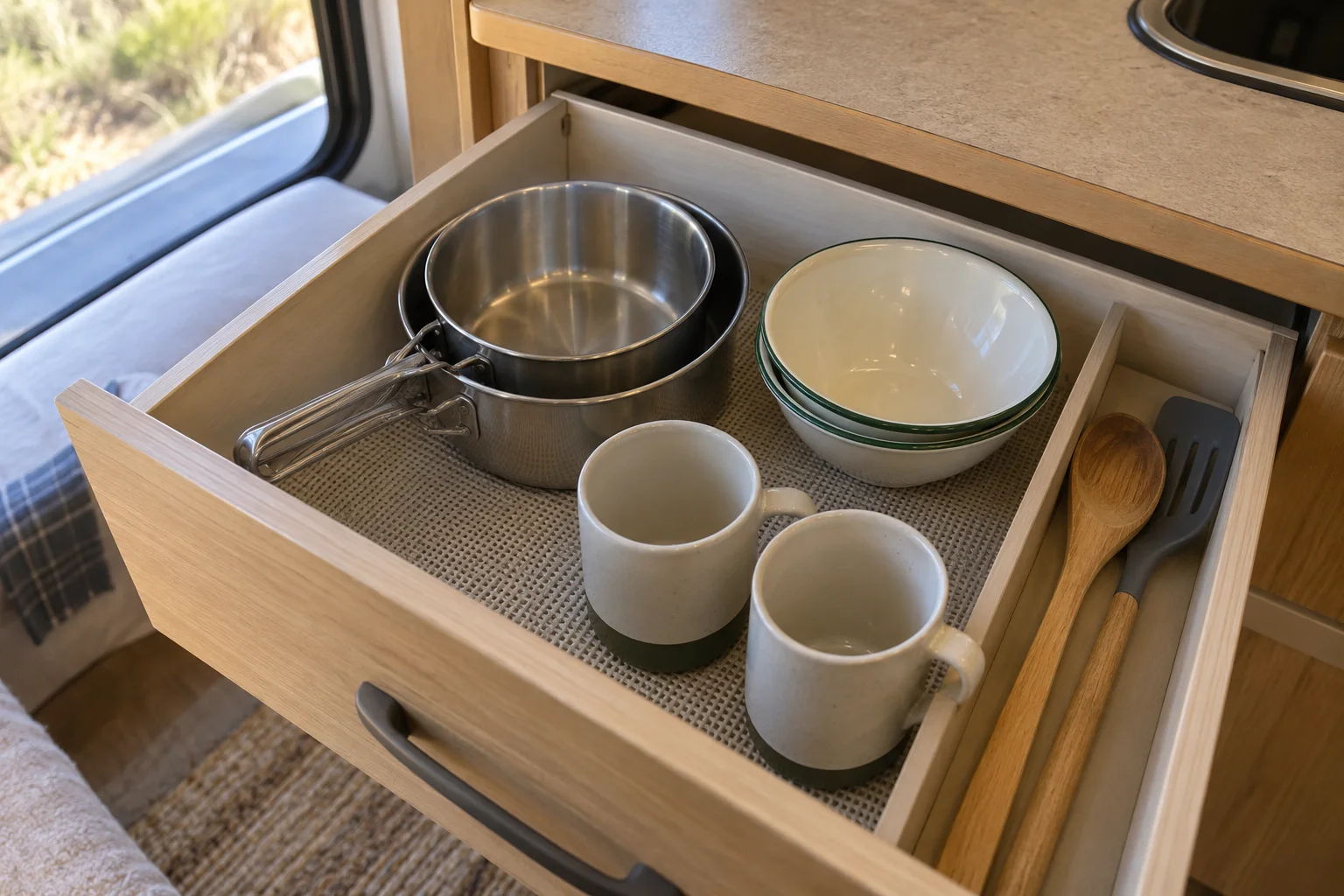
Think of a few meals you’re likely to cook, then pack what you need to make them. A saucepan, frying pan, chopping board, safely stored knife, tongs and enough crockery for everyone is a sensible starting point. Add what suits your cooking setup.
If two pots fit inside each other, that’s cupboard space saved. If you’ve packed three ways to make the same cup of coffee, you might have room to cut back.
Give food a proper place in the fridge or Esky and plan your shopping around reliable stops. You don’t need to carry a supermarket, but you do need enough for the stretch ahead and possible delays.
Our small caravan kitchen guide has more ideas for making a small cooking space work.
Don’t guess your water setup
Check where you can refill with drinking water before you head off. A campsite having a tap doesn’t automatically mean the water is suitable for drinking.
What you carry depends on the people travelling, the weather and how long you’ll be between reliable supplies. Allow for delays, especially if you’re heading away from services.
Keep drinking-water containers and equipment separate from anything used for wastewater. If you’re taking a grey-water container, start with it empty and ready to collect your used water. Check the campsite’s collection and disposal requirements before arriving.
Think about washing and toilets as well. Staying at a caravan park with facilities is a different arrangement from camping without them. Sort out what your group needs before you’re parked up wondering where everyone’s going to wash.
Sort the sleeping gear and clothes
Check who’s sleeping where. Beds, sleeping bags, pillows and something suitable underneath you are worth sorting out properly. Finding out someone has a sleeping bag but no sleeping mat isn’t a great start.
For caravan beds, measure the mattress before buying sheets. Some have odd sizes or cut-off corners.
Pack clothes around how often you’ll do laundry, with a sensible spare allowance. Add layers for the conditions on your route, rainwear, sun protection and footwear suited to what you’ll be doing.
Give dirty clothes their own bag. Otherwise you’ll end up rummaging through the same pile, trying to remember what’s clean.
Give everything a home
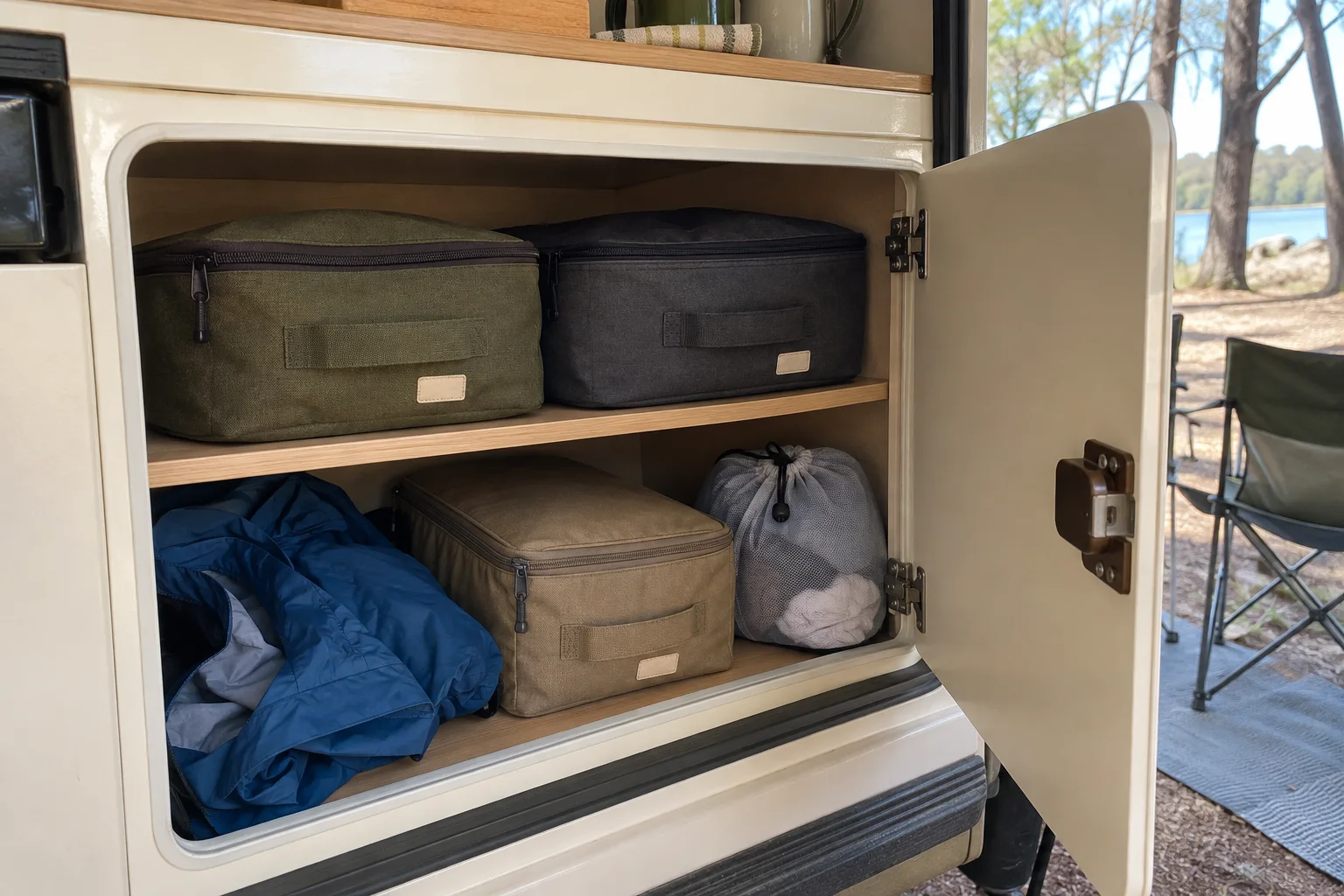
Keep the things you use every day easy to reach. You shouldn’t have to unload a storage locker every time you want a saucepan or clean shirt.
Packing cubes or separate bags can help, but measure the space before buying organisers. A container that doesn’t fit is just another thing to find a home for.
Secure loose gear for travel and check cupboard catches. Non-slip liners can help with sliding, but they don’t replace proper restraints or working latches. There are more ideas in our storage guide for corrugated roads.
Check the weight, not just the cupboard space
Just because everything fits doesn’t mean you should take it.
Water, fuel, passengers, accessories and luggage all add to the loaded setup. Check the applicable vehicle, caravan, axle, towbar and combination limits rather than guessing by how it looks.
Queensland Government’s towing guidance explains the limits and recommends a public weighbridge if you’re unsure about trailer and load mass. Get the relevant loaded weights checked before the long drive.
Your Big Lap packing list: a quick check
The trip: route, bookings, conditions and planned activities.
Water and food: reliable resupply stops, suitable storage and extra supplies for delays.
Sleeping and clothing: bedding for everyone, practical footwear and weather layers.
Cooking and washing: a workable kitchen kit, toiletries and a waste plan.
Power and light: tested lights, charging leads and suitable backup power.
Emergencies: accessible first aid, regular medication, contacts and a communication plan.
Vehicle and storage: trip-appropriate equipment, secured gear and checked loaded weights.
The good stuff: fishing gear, walking gear or whatever you’ll actually enjoy using.
Try it for a weekend first
Put your Big Lap packing list to the test: pack for the longer trip, then spend a couple of nights using the setup close to home.
Keep three notes on your phone: what you used, what you missed and what annoyed you. You’ll soon notice if the kitchen’s awkward or there’s nowhere for wet boots.
Take out unnecessary duplicates, but keep essential safety gear even if the weekend didn’t call for it. Leave room for the things that make the trip enjoyable, too. Your favourite chair doesn’t have to do three jobs to deserve a place.
You don’t need every cupboard perfect before you leave. Get the important things sorted, make them easy to use and give yourself a bit of room to enjoy the trip.
What’s the one thing you always pack—and the thing you wish you’d left at home?
[…] First Big Lap packing guide is a useful place to work through what earns a spot. You don’t need to buy something for every […]
[…] before leaving. If you are still working through those decisions, have a look at our guides to what to pack for your first Big Lap and building a realistic Big Lap travel budget. Together, they will give you a much clearer picture […]